
Which piano should you invest in: what to take into account?
Choosing your first keyboard is an exciting step toward learning music. Whether you’re a parent looking for an instrument for your child or an adult finally pursuing a lifelong dream of playing the piano, the right instrument can make learning more enjoyable, comfortable, and rewarding.
With so many models, features, and prices available, knowing what to look for can be challenging. Should you choose an acoustic or a digital piano? Are weighted keys really necessary? Is buying a used instrument a good idea? And how should your living environment influence your decision?
Here are ten points to consider in order to make an informed purchase.
1. Choose the right number of keys
One of the first things to consider is the number of keys on your non-acoustic instrument.
76 keys: A compact compromise
A 76-key keyboard offers a wider range of notes than smaller models while remaining relatively compact. It can be suitable for certain beginners, depending on their musical goals and available space. However, its reduced range may eventually limit the repertoire you can play as your skills develop.
88 keys: The best long-term choice for piano study
A traditional acoustic piano has 88 keys, and a full-size digital piano reproduces that range. For children and adults who intend to study piano seriously, an 88-key instrument is generally the best investment.
It allows students to develop their technique, explore a broader repertoire, and progress without outgrowing their instrument as quickly.
2. Look for weighted keys
The feel of the keys is one of the most important factors when choosing an instrument for piano lessons.
On an acoustic piano, the keys have resistance that responds to the way you press them. This allows pianists to control volume, expression, and musical phrasing.
Many inexpensive keyboards have lightweight, unweighted keys. While these can be useful for basic musical exploration, they do not reproduce the feel of an acoustic piano.
When shopping, look for these terms:
Touch-sensitive keys: Respond to how gently or firmly you play, allowing some control over volume.
Fully weighted keys: Provide greater resistance and are generally preferable for developing piano technique.
Graded hammer action: Simulates the heavier feel of lower keys and lighter feel of higher keys, similar to an acoustic piano.
For most aspiring pianists, a full-size digital piano with touch-sensitive, weighted keys and a good hammer-action mechanism are the strongest starting point.
Note that touch sensitivity and weighted action are different features. A keyboard can have touch-sensitive keys without having weighted keys.
3. Consider your living environment
Your home environment should play an important role in choosing an instrument. The best option for someone living in an apartment may be different from the best option for someone living in a detached house.
If you live in an apartment or condominium
A digital piano is often the most practical choices because it allows you to control the volume and practice with headphones.
This is particularly valuable when living near neighbours, sharing walls, or trying to avoid disturbing other members of the household.
Before purchasing, consider:
Headphone connectivity: Allows you to practice quietly while hearing the instrument clearly.
Adjustable volume: Useful when you want to play through built-in speakers without disturbing others.
Compact dimensions: Helps you make the most of limited living space.
A suitable stand or cabinet: Ensures the instrument fits safely and comfortably in your practice area.
Keep in mind that even a digital pianos can transmit some mechanical noise through its keys, stand, and floor. Headphones eliminate most audible speaker sound, but they do not eliminate every sound produced by playing.
If you live in a house
Having more space gives you greater flexibility. You may be able to accommodate a larger digital piano, a cabinet-style instrument, or even an acoustic piano.
A digital piano remains an excellent option, particularly if you want the convenience of headphones and minimal maintenance.
An acoustic piano may also be worth considering if you appreciate its natural resonance and physical response. However, it requires more space, periodic tuning, and consideration of how its sound may carry through the house and to neighbouring properties.
My recommendation: For most beginners, especially those living in apartments or condominiums, an 88-key digital piano with weighted keys and a headphone connection offers an excellent balance of musical development, convenience, and space efficiency.
4. Look for useful features
Not every beginner needs a digital keyboard packed with technology. A few practical features, however, can make learning easier.
Headphone connection: Especially useful for apartment living and private practice.
Music rest: Makes it easier to read sheet music or follow lesson materials.
USB or MIDI connectivity: Can connect the instrument to compatible computers, tablets, and music-learning software.
Adjustable volume: Allows you to practice comfortably without disturbing others.
Stable stand and bench: Encourage good posture and a comfortable playing position.
Built-in speakers: Essential if you want to play without headphones.
Sustain pedal: Make sure the instrument supports a compatible pedal and check whether it is included or sold separately.
Bluetooth audio and app integration can be convenient, but they are optional. Do not pay extra for features you are unlikely to use.
5. How much should you spend? Three models worth contemplating
The best keyboard is not necessarily the most expensive one. It is the instrument that meets your learning needs, fits your budget, and encourages you to play regularly.
Mid-range: $500–$1,000 CAD
These models are worth considering if you want an 88-key instrument without making a large initial investment. Actual prices vary by retailer, availability, sales, condition, and included accessories.
1. Roland FP-10
A compact digital piano with 88 weighted keys and Roland’s PHA-4 Standard hammer action. It is a strong option for beginners who prioritize a realistic playing feel.
2. Yamaha P-45
An established entry-level digital piano with 88 weighted keys and Yamaha’s Graded Hammer Standard action. It is worth investigating on the used market, particularly if you find one in good condition.
3. Casio CDP-S110
A slim, portable digital piano with 88 weighted keys. Its compact design makes it a practical option for smaller homes and apartments.
Who should consider this range? Beginners who are committed to learning piano and want a balanced combination of key action, sound quality, and long-term usability.
Remember to budget for a stand, bench, sustain pedal, and headphones if they are not included.
6. Consider buying a used instrument
Buying a used instrument can be an excellent way to obtain better quality for your budget. Many people sell digital and acoustic pianos because they are moving, changing instruments, or no longer using them.
Online marketplaces, including Facebook Marketplace, can offer good opportunities to find an instrument at a lower price than buying new.
Where to look:
Facebook Marketplace: Search for used instruments in your area and compare several listings.
Local music stores: Some sell used or refurbished instruments and may offer a limited warranty.
Friends, family, and local music communities: Someone you know may be selling an instrument they have maintained well.
What to check before buying
If you find a promising listing, ask the seller for the make, model, age, and reason for selling.
Whenever possible, arrange to test the instrument before paying.
Check that:
All 88 keys work properly and respond consistently.
The keys produce sound at different playing intensities.
The speakers work without unusual distortion or crackling.
The headphone connection functions correctly.
The sustain pedal works and is compatible with the instrument.
The buttons, display, and other controls operate properly.
The correct power adapter is included.
There are no signs of liquid damage, corrosion, or significant physical damage.
If you cannot test the instrument yourself, consider asking someone knowledgeable to accompany you.
Also verify the exact model and its original specifications. A listing described as a digital piano does not necessarily guarantee weighted keys or a full 88-key range.
My recommendation: Do not rule out a used digital and acoustic pianos. A quality, well-maintained, full-size instrument can provide years of enjoyment and support your musical progress without requiring you to spend more than necessary.
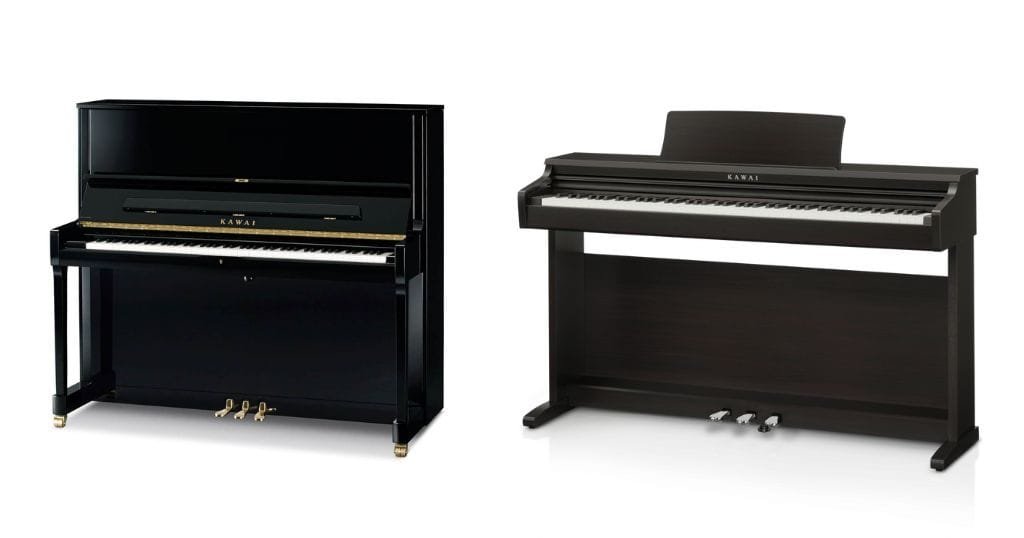
7. Should you buy a digital piano or an acoustic piano?
Both can be excellent instruments, but they serve slightly different needs.
A digital piano is often the most practical choice for beginners because it offers volume control, headphone use, and relatively straightforward maintenance. It is also generally easier to move.
An acoustic piano provides distinctive physical response, natural resonance, and a direct connection between the player’s touch and the instrument’s sound. However, it requires more space and periodic tuning.
For many beginners, a good digital piano with weighted keys provides an excellent balance of affordability, convenience, and musical development.
The right choice depends on your budget, living environment, musical goals, and preferences.
8. Your child’s comfort and development
For parents, choosing an instrument involves more than finding an affordable option. It also means considering the child’s physical comfort, interest, and musical development.
A full-size keyboard with 88 keys can be an excellent long-term choice for a child beginning formal piano lessons. The instrument must, however, be set up appropriately.
The child should be able to sit comfortably, keep the shoulders relaxed, bend the elbows naturally, and reach the keys without straining. A suitable bench and stable stand are important parts of the setup.
If a young child is only exploring music and the family’s commitment is still uncertain, a more affordable instrument may be a reasonable temporary option. As lessons progress, however, a full-size instrument with weighted keys will offer greater continuity.
Most importantly, avoid choosing an instrument solely because it has colorful lights or many built-in games. Features can create initial excitement, but a comfortable playing experience and appropriate instruction help develop lasting musical skills.
9. Try before you buy whenever possible
Specifications matter, but they cannot tell you everything about how an instrument feels.
If you have the opportunity, visit a music store and try several models. Compare the weight of the keys, the sound through the speakers, the pedal, and the overall playing experience.
Ask whether the instrument has 88 full-size keys, whether the keys are weighted and touch-sensitive, and whether the sustain pedal and stand are included.
If you are purchasing online, read the specifications carefully and check the return policy.
You do not need to understand every technical feature before making a decision. A knowledgeable piano teacher can help you distinguish the features that genuinely matter from those that are simply nice to have.
10. Ask your piano teacher before making your purchase
One of the simplest ways to avoid buying the wrong instrument is to consult your piano teacher before purchasing.
Your teacher can help you choose a keyboard based on your goals, available space, budget, and expected level of commitment. They can also explain which features will support proper technique and which compromises may become limiting later.
The right instrument, combined with thoughtful education and consistent practice, can make the journey more enjoyable and productive.
Ready to begin your piano journey?
I help children and adults take their first steps toward becoming confident, expressive musicians through personalized piano education.
Book an introductory session with me to discuss your musical goals, ask questions, and discover how to get started with confidence.
